
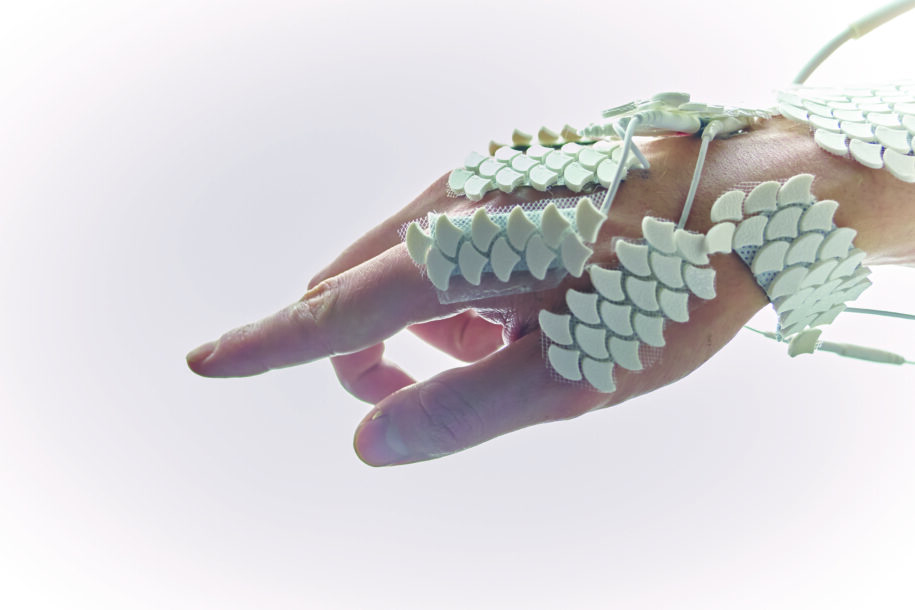
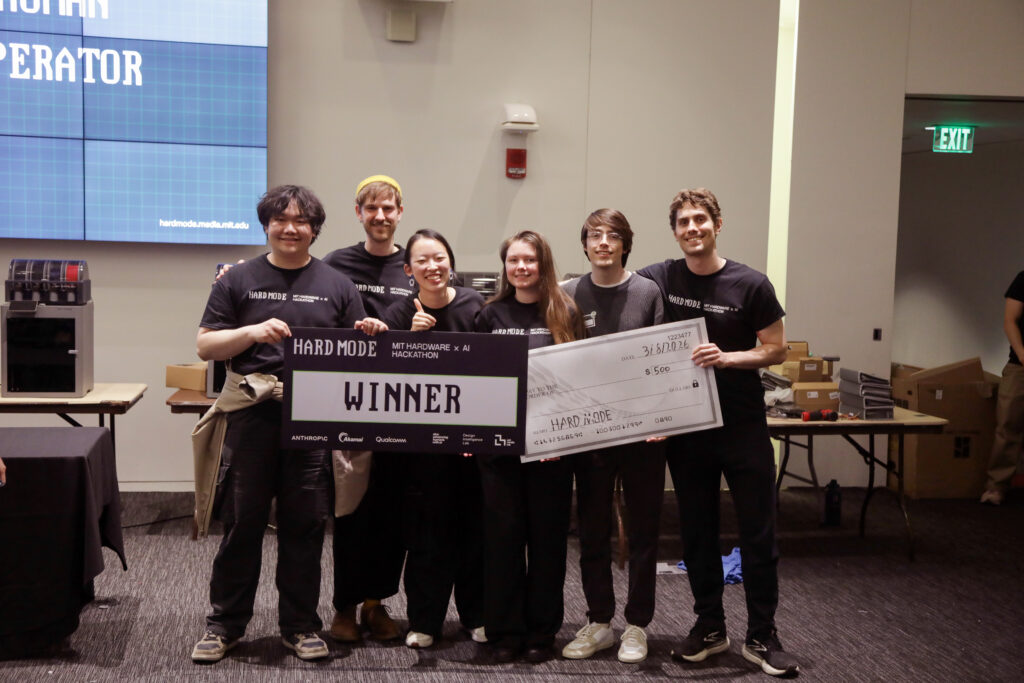
Human Operator is an AI-powered wearable glove system developed by a six-person team of MIT students. The project won first place in the “Learn Track” at MIT Media Lab’s HARD MODE 2026 hackathon, a 48-hour competition focused on intelligent physical systems.
The idea is simple, unsettling, and important: instead of giving a person instructions on a screen, Human Operator physically guides the user’s hand and wrist through electrical muscle stimulation. In other words, the AI does not only tell the body what to do. It helps move it.
For anyone asking “What is Human Operator?”, the short answer is this: Human Operator is a prototype AI glove that uses sensors, a vision-language model, and electrical stimulation to guide human hand movements in real time. It turns the human body into the interface through which AI can act in the physical world.
What Is Human Operator?
Human Operator is a wearable AI system designed to give artificial intelligence direct physical influence over a human hand. It combines a glove, camera input, voice input, an AI model, Arduino-based hardware, and electrical muscle stimulation to move the user’s hand or fingers during a task.
This makes Human Operator different from most AI tools. It is not a chatbot, not a voice assistant, and not a robot arm. It is a human augmentation device in which AI interprets the environment and guides the body’s movement.
The project’s creators described it as “a body for AI”, and the phrase is accurate. The AI does not need a humanoid robot to act physically. It can use the person wearing the glove as its actuator.
That is why Human Operator matters. It shifts AI from a system that recommends actions to a system that can participate in physical action.
How Human Operator Works
Human Operator works through a closed loop between perception, interpretation, and physical movement.
The camera captures the user’s point of view, allowing the AI to see what the user sees. Voice input gives the system extra context, such as what the person is trying to do. The AI model then processes the visual and spoken information and decides what movement is needed.
The physical output comes through electrical muscle stimulation, also known as EMS. Small electrical currents are delivered through electrodes placed near the wrist and fingers. These currents activate specific muscles, causing the hand or fingers to move.
Arduino-based hardware controls the timing and intensity of the stimulation. The result is a wearable system where AI can decide, in real time, how to guide the user’s movement.
This is not passive feedback. It is not just a vibration telling the user where to move. Human Operator physically nudges the muscles into action.
Human Operator and Electrical Muscle Stimulation
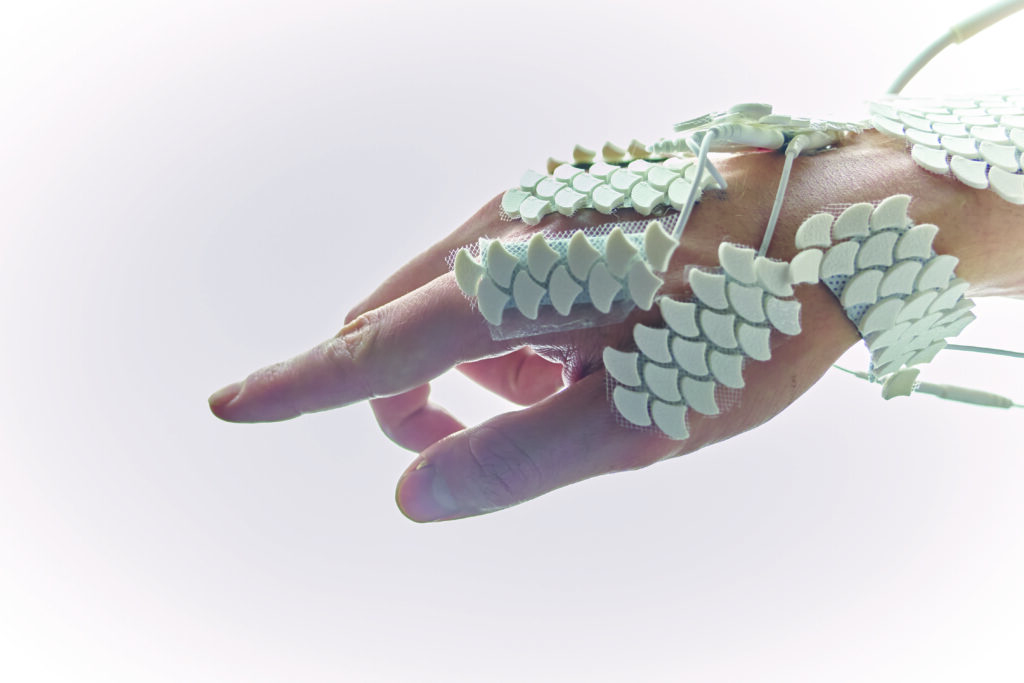
The key technology behind Human Operator is electrical muscle stimulation. EMS is not new. It is already used in rehabilitation, physical therapy, sports recovery, and clinical contexts. What is new here is the way EMS is connected to an AI system that sees, interprets, and acts.
Traditional EMS usually follows a predefined pattern. Human Operator adds adaptive control. The AI can analyse what is happening in the moment and decide how the hand should move.
That distinction is crucial. A fixed stimulation device can help a muscle contract. Human Operator suggests a different category: AI-guided muscle activation based on live context.
This moves the project closer to embodied artificial intelligence, where AI is no longer limited to digital output. It can affect physical movement directly.
What the Human Operator Demo Showed
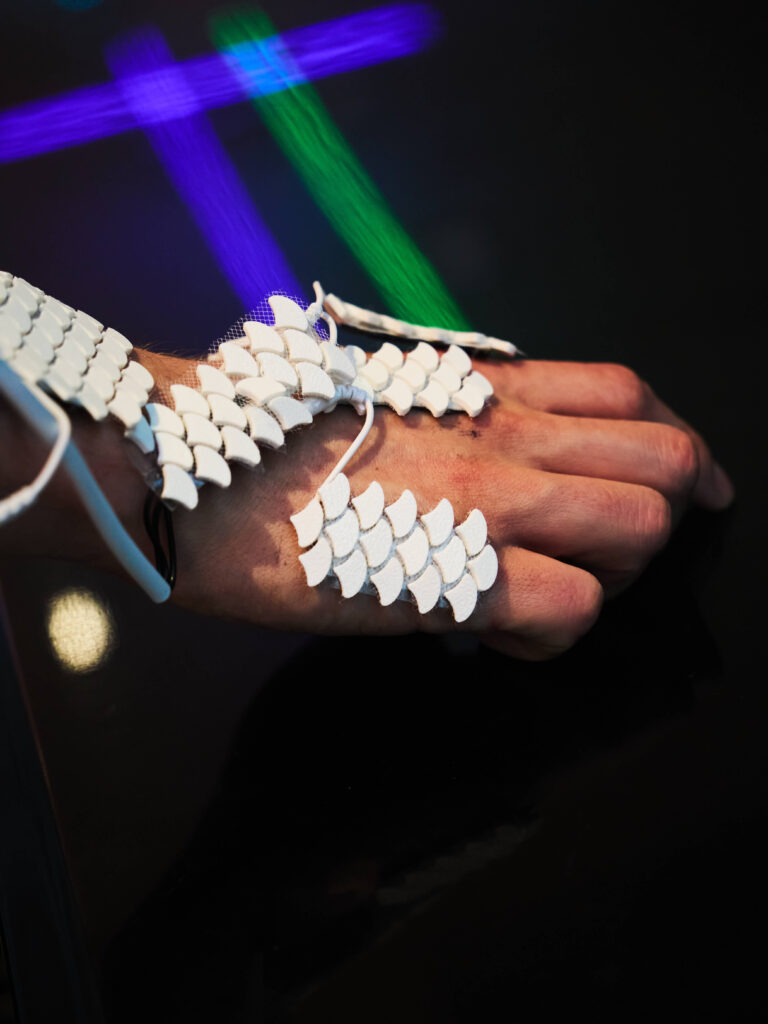
The public demonstrations of Human Operator focused on simple but striking actions.
The system guided a user’s hand to play piano melodies. It helped make an OK sign. It assisted with waving and drawing tasks. In the piano demonstration, the AI monitored the keyboard and the user’s hand, then used electrical stimulation to guide the fingers to the correct keys.
The result looked less like normal instruction and more like a limited form of AI puppeteering.
That word is uncomfortable, but it captures the philosophical tension. The human is still present. The hand belongs to the person. The muscles are human muscles. But the movement is being shaped by a machine decision.
For Human Operator, this tension is not a side issue. It is the entire point.
Why Human Operator Is Not Just Another Smart Glove
MIT has explored smart gloves before. Earlier glove systems used sensors, machine learning, and haptic feedback to help users learn physical skills. Those gloves could record expert movements, translate them into vibration cues, and help students improve tasks such as piano playing.
Human Operator goes further.
A haptic glove tells the user what to do. Human Operator helps make the movement happen. Earlier systems guide through feedback. Human Operator guides through muscle contraction.
That difference changes the category. It is no longer just a learning aid. It becomes a physical AI interface.
The glove is not simply communicating with the user. It is entering the movement loop.
Why Human Operator Matters for AI and Human Augmentation
Human Operator is important because it points toward a future where AI does not only replace cognitive labour, but also participates in physical skill.
Until recently, the boundary was relatively clear. AI could write text, generate images, analyse documents, suggest code, answer questions, or control software. Physical action still required robots, industrial machines, drones, or human execution.
Human Operator blurs that boundary. It shows how AI can act physically without having its own body. The human body becomes the bridge.
This has major implications for human augmentation. A person could potentially learn a movement faster because the AI helps the body feel the correct action. Someone recovering from injury could receive more precise movement assistance. A worker could be guided through a complex manual process. A musician could train finger placement. A person with limited mobility could regain partial access to actions they cannot perform alone.
In the best version of this future, AI becomes a physical trainer, therapist, assistant, and co-operator.
In the worst version, it becomes a control layer placed between intention and action.
Potential Uses for Human Operator
The most obvious application is physical rehabilitation. Stroke survivors, patients recovering from nerve injuries, or people relearning hand coordination could benefit from AI-guided stimulation. If the system can see the task and adjust stimulation in real time, therapy could become more adaptive and personalised.
Accessibility is another major area. Human Operator-like systems could help people with limited hand mobility perform everyday actions such as writing, using tools, eating, or interacting with devices.
Hands-on education is also relevant. The system could train fine motor skills by guiding the user through correct movement patterns. Piano was the demo, but the same principle could apply to drawing, manufacturing, lab work, medical training, or technical repair.
There is also a more advanced possibility: human-AI collaboration in physical environments. If AI can guide the body during complex tasks, then the distinction between human and machine operators becomes less clear.
That makes the name Human Operator especially interesting. It can be read in two ways. A human operating a system, or a system operating through a human.
Is Human Operator Replacing Humans?
Human Operator does not replace humans in the traditional sense. It does not remove the person from the task. It is required for the human body to function. It depends on the user’s hand, wrist, muscles, and physical presence.
But it does replace part of the human decision-making and action chain.
Normally, a person sees a situation, decides what to do, and moves. With Human Operator, AI participates between perception and movement. The system can interpret the environment and help generate the physical action.
That is not a full replacement. It is a partial substitution of control.
This is why Human Operator belongs in the broader conversation about the future of humans and AI. Replacement will not always look like a robot taking a job. Sometimes it will look like AI entering the human body’s workflow, one movement at a time.
Human Operator and the Future of Embodied AI
Human Operator is not yet a commercial product. It is a hackathon-winning prototype, not a mature medical or consumer device. Its current demonstrations are limited, and serious questions remain around safety, consent, reliability, calibration, liability, and long-term use.
Still, the direction is clear.
AI is moving from screens into the physical world. Sometimes that means humanoid robots. Sometimes it means autonomous vehicles, drones, or robotic arms. Human Operator suggests another path: AI can become embodied through the human body itself.
That idea is more intimate than robotics. A robot stands outside you. A system like Human Operator acts through you.
For Replace Humans, this is the real story. Human Operator is not just a clever MIT project or a futuristic glove. It is an early example of a deeper transition: artificial intelligence is beginning to cross the boundary between recommendation and action, between instruction and movement, between assisting the human and partially operating the human.
Human Operator Shows the Next AI Frontier
Human Operator matters because it makes the future of AI physically visible.
The project shows that AI can do more than generate content or answer questions. It can guide muscles. It can shape motion. It can help a person perform a physical task they might not be able to complete alone.
That creates powerful opportunities in rehabilitation, accessibility, education, and skill training. It also introduces uncomfortable questions about control, dependency, responsibility, and bodily autonomy.
The most important point is not that MIT students built a glove that can help someone play piano. The important point is that AI now has a pathway into human movement.
Human Operator is still early. But the concept is already clear: the next interface for artificial intelligence may not be a screen, a keyboard, or a voice assistant.
It may be the human body.
Leave a Reply